

Chapter 7: NIMBY

Updated: Jan 22
Community backlash against datacenters is exploding nationwide; towns across the country are howling "Not In My Backyard!"; and they are winning.

“The techlash is real,” -Abraham Silverman, general counsel for New Jersey’s public utility board, 2019-2023.
Key Points:
1. The legacy datacenter and datacenter power industries face yet another impediment to growth, the rapidly growing opposition from local communities across the US.
2. Community complaints seem justified as substantial evidence supports their argument that local communities subsidize datacenter projects, in the form of increased electricity prices, for little tangible benefit.
3. Thus, local community pushback is likely to intensify for the foreseeable future.
4. This further ensures that legacy industry solutions will never be able to meet the enormous American datacenter electricity shortage.
5. And so, a new power plant / datacenter system, such as my off-grid Solar Computing Clusters, appears to be the only viable solution for America.
Key Stats:
142 - known activist groups, across 24 states, that have organized to block datacenter construction and expansion.

$64.4 Billion - cumulative size of datacenter projects blocked or delayed by local opposition from 2023-2025.

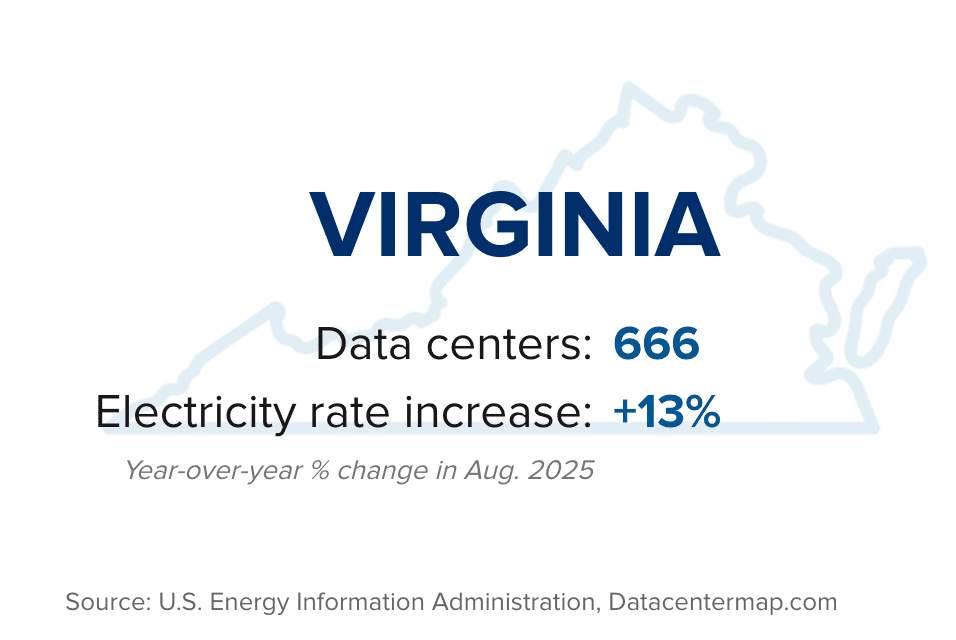
Virginia - Northern Virginia is considered the datacenter capital of the world, representing about 1/7 of global datacenter capacity. Over 30 million square feet in operation, with 30+ million square feet in development. 42 activist groups actively campaigning against datacenter development.

267% - increased wholesale electricity prices near data centers in Baltimore, MD, where resident electricity bills have surged 80% in the past 3 years.

700,000 homes - number of average US homes equivalent to a 1 Gigawatt datacenter.

80 million - number of Americans currently struggling to pay their utility bills.
A Prayer Circle In Peculiar

On a warm autumn evening in 2024, Chad Buck led his family into a field outside their Missouri home. They joined hands and formed a prayer circle on the very land that a tech company wanted to transform into a massive datacenter campus. The Buck family had lived for years in Grand Oaks Farm, a quiet subdivision near Peculiar, Missouri — a town of six thousand people located twenty miles south of Kansas City. Now they faced the prospect of a $1.5 billion facility rising just fifty feet from their property line.
"Big tech is preying on small communities all over this country, and they're using our loose zoning laws. Our community just feels like they're not being heard."
The proposed Harper Road Technology Park would have covered 504 acres — more than twice the size of the Truman Sports Complex — with up to seven datacenter buildings, each spanning 300,000 square feet. Diode Ventures, the developer, had been working behind the scenes with Peculiar's mayor and city administrator, signing non-disclosure agreements and pursuing 25-year tax abatements. The datacenter would create just 100 jobs, most of them high-level technician roles, not blue-collar careers.
When residents discovered the plans, they mobilized. A Facebook group called "Don't Dump Data in Peculiar" attracted nearly 1,000 members — about one-sixth of the town's entire population. Yard signs reading "No Hyperscale Data Centers" sprouted across town. Some residents even wore t-shirts emblazoned with "D.A.R.E. to Resist Doug and Diode" — a play on the anti-drug campaign, with Doug referring to Mayor Doug Stark.
One resident visited a similar datacenter in Nebraska and returned with a warning. "The buildings disappeared in the sea of electrical poles," Brian Lincoln recalled. "The 150-foot towers and constant hum of generators had driven everyone out. That's what Peculiar is going to look like when it's done."
Dozens of residents packed planning meetings, forcing officials to relocate from City Hall to the Lions Club to accommodate the crowds. By October 2024, the Board of Aldermen voted unanimously to remove the datacenter definition from the town's zoning ordinance — effectively killing the project.
The victory in Peculiar wasn't isolated. Wendy Reigel, an activist from Chesterton, Indiana, had ordered 200 "No data center" yard signs for her own fight against a $1.3 billion project. When that developer pulled out, she packed the signs into cardboard boxes and shipped them to Missouri, where they joined the fight in the Peculiar campaign.
Peculiar isn't peculiar anymore. This scene is playing out across America.

Grassroots Revolts - Nationwide Scale
The prayer circle in Missouri was just one skirmish in a rapidly escalating nationwide rebellion. According to Data Center Watch, which tracks opposition to datacenter projects across the country, $64.4 billion in datacenter investments have been blocked or delayed between May 2023 and March 2025 — with $18 billion blocked outright and $46 billion stuck in regulatory limbo.

But the movement is accelerating. In just three months from March to June 2025, an additional $98 billion in projects were impacted — more than the total from the previous two years combined. "Opposition to data centers is accelerating," the researchers wrote. "As political resistance builds and local organizing becomes more coordinated, this is now a sustained and intensifying trend."
Across the country, Data Center Watch has identified at least 142 activist groups operating in 24 states. Virginia, the epicenter of datacenter development, has spawned 42 groups alone. These aren't fringe operations — they're winning. The opposition groups have successfully blocked or delayed two out of every three projects they've targeted.
The opposition cuts across political lines in surprising ways. A review of public statements found that 55% of elected officials opposing datacenter projects were Republicans, while 45% were Democrats. On the right, concerns focus on tax abatements and corporate welfare; on the left, environmental impacts and resource consumption.
Perhaps the most striking development is the spread of pre-emptive moratoria — communities blocking datacenters before any developer even comes knocking. Multiple councils across Georgia, Illinois, Kentucky, Kansas, Ohio, Tennessee, Missouri, Idaho, Indiana, and Pennsylvania have introduced moratoriums against datacenter development.
Ground Zero - Datacenter Alley

To understand why opposition has become so fierce, look no further than Northern Virginia — the datacenter capital of the world. The region hosts 13% of global datacenter capacity and routes 70% of the world's internet traffic. Loudoun County alone contains nearly 50 million square feet of datacenter space across roughly 200 facilities. It's called "Data Center Alley" for a reason.
Mike Turner, a retired Air Force colonel and pilot, became a Loudoun County supervisor in 2020. At first, he had a lot to be proud of — his Ashburn district hosted the largest concentration of datacenters anywhere on Earth. Five years later, he's not so much proud as worried.
In a 38-page paper delivered to his board, Turner warned that Dominion Energy couldn't produce enough power to meet future demands. "By 2028," he wrote, "the datacenter power load in Loudoun could be ten times what it was when I took office."
"The imbalance between demand and power available right now is extreme and getting worse. We are experiencing what's effectively another industrial revolution — it's a digital revolution."
Then came the bombshell from Washington. In July 2025, the U.S. Department of Energy released a report warning that eastern and northern Virginia could face up to 19 days of blackouts per year within five years unless things change dramatically.
On July 10, 2024, 60 datacenters in Northern Virginia simultaneously disconnected from the power grid without warning — an automated safety response to voltage fluctuation caused by equipment failure. The sudden surge in excess electricity sent grid operator PJM and utility Dominion Energy scrambling to cut generation quickly enough to avoid region-wide blackouts.
The Bill Comes Due

The opposition isn't just about noise and aesthetics. It's about money — specifically, the money being extracted from ordinary ratepayers to subsidize Big Tech's expansion.
The starkest evidence comes from the PJM capacity auction. In 2022, the auction cleared at $2.2 billion. By 2024, it had exploded to $14.7 billion — a more than sixfold increase. The 2025 auction climbed to $16.1 billion. According to the independent market monitor, datacenter demand accounted for 63% of that increase — $9.3 billion in a single year.
A Bloomberg analysis found that areas near significant datacenter activity have seen wholesale prices surge by as much as 267% over five years. More than 70% of the pricing nodes that recorded increases were located within 50 miles of major datacenter clusters.
The human cost is immense. According to the Census Bureau, approximately 80 million Americans are struggling to pay their utility bills, with nearly 77 million households forced to reduce or forgo basic necessities like medicine or food to pay an energy bill at least once a year.
Kevin Stanley, a 57-year-old man surviving on disability payments in Baltimore, has seen his electricity costs rise 80% in the past three years. He lives within a few tens of miles of new datacenter developments. "They can say this is going to help with AI," he said from his front steps, "but how is that going to help me? How's that going to help me pay my bill?"
Microsoft's Admission
Even the hyperscalers know the situation is untenable.
In November 2025, at a legal conference, Microsoft attorney Mia Stone made a remarkable admission: "Where data centers used to be built more away from communities, as they move into these areas, then you have neighbors that are near you, and nobody really wants a data center in their backyard."
"I don't want a data center in my backyard," she added.
Stone also acknowledged the jobs problem. "Data centers, once they are operational, don't bring a lot of jobs. They do on the construction side, but not really getting a ton of that community benefit from having a data center really, truly in your backyard."
Just weeks before, Microsoft had withdrawn its application for a 244-acre datacenter in Caledonia, Wisconsin, after 40 people spoke during two hours of public comment. "Based on the community feedback we heard," Microsoft conceded, "we have chosen not to move forward with this site."
The Spreading Wildfire
The opposition is catching fire faster than the industry can respond.
In Virginia, the Piedmont Environmental Council has organized rallies and distributed yard signs reading "Save Culpeper: Stop Data Center Sprawl." A judge voided zoning for the PW Digital Gateway campus after legal challenges. Amazon is suing King George County supervisors over a denied project — but the newly elected board, which had campaigned against the datacenter, is fighting back.
Environmental concerns are amplifying the opposition. In Georgia, testimony before a House committee estimated that existing and planned datacenters would require 68.5 million gallons of water per day — most of it consumptive, meaning not returned to the system.
The movement is learning and adapting. Activists share tactics across state lines. The signs that were obsolete in Indiana found new homes in Missouri. "As development expands and media attention intensifies," Data Center Watch observed, "local groups are learning from one another."
The Inescapable Conclusion
The NIMBY movement is not going away. It represents yet another obstacle — perhaps the most politically potent one — for the legacy datacenter industry.
Consider what we've established in the previous chapters: 5-7 year interconnection delays to get new power plants online. 4+ year lead times for transformers. 104 GW of generation capacity retiring while only 22 GW of firm power is being added. A projected 44-47 GW shortfall by 2027. An aging grid vulnerable to cascading failures.
Now add community opposition that has already blocked, delayed, or otherwise affected over $160 billion in projects — and is accelerating. Add pre-emptive moratoria in states that haven't even seen proposals yet. Add elected officials who ran on anti-datacenter platforms and won.
The legacy datacenter industry cannot overcome this obstacle. Every project requires local permits. Every local permit requires community acceptance. And communities are saying no.
This is where the case for off-grid Solar Computing Clusters appears to go from compelling to necessary.
Consider what remote, off-grid facilities in places like New Mexico offer: no strain on local electricity — self-contained power from dedicated solar installations. No competition with residential customers. No water consumption from local aquifers. No noise pollution. No property value impacts. No controversial rezonings.
Communities won't fight what doesn't affect them.
The NIMBY movement ensures that legacy datacenter solutions will never catch up to demand. The shortage will only explode. But remote, off-grid Solar Computing Clusters bypass the entire problem. They offer compute capacity without community conflict.
The techlash is real. The question is whether the industry is ready to adapt.
Learn more about my work in the next chapters, and at www.639solar.com.

Sources:
AI's Soaring Energy Consumption is Causing Skyrocketing Power Bills For Households Across the US, Tom's Hardware
Fighting Back Against Datacenters One Small Town at a Time, Washington Post
$64 Billion Of Datacenter Projects Have Been Blocked or Delayed Amid Local Opposition, DatacenterWatch
Community Members Protest Datacenter in Martindale Brightwood, Mirror Indy
Residents Protest Planned Transmission Lines, Fauquier Times
The New Energy Crisis, Fauquier Times & Prince William Times
Pre-Emptive Datacenter Moratoria: The Hot New Trend of Local Government, Datacenter Dynamics
Outreach With the Opposition: A Conversation With the Piedmont Environmental Council, Datacenter Dynamics
"Nobody Really Wants a Datacenter in Their Backyard," Says Microsoft Attorney, Datacenter Dynamics
EIA Publishes its First Energy-Sector Forecasts Through 2026, US Energy Information Administration
Extracting Profits From The Public: How Utility Ratepayers are Paying For Big Tech's Power, Harvard Law School
Thirsty For Power And Water, AI-crunching Datacenters Sprout Across The West, Stanford University
Datacenters Are Concentrated in These States. Here's What's Happening To Electricity Prices, CNBC
Datacenters Powering Artificial Intelligence could Use More Electricity Than Entire Cities, CNBC
AI Datacenters Are Sending Power Bills Soaring, Bloomberg
In The World's Datacenter Hotbed, How Close is Too Close, And Who Should Pay?, VPM NPR
Judge Rules Zoning For PW Digital Gateway Datacenter Campus In Virginia Voided, Datacenter Dynamics
Amazon Takes King George County Supervisors to Court Over Denied Datacenter Project, Datacenter Dynamics
Lawmakers Fear AI Datacenters Will Drive Up Residents' Power Bills, Stateline
What We Know About Energy Use at US Datacenters Amid the AI Boom, Power Research Center

